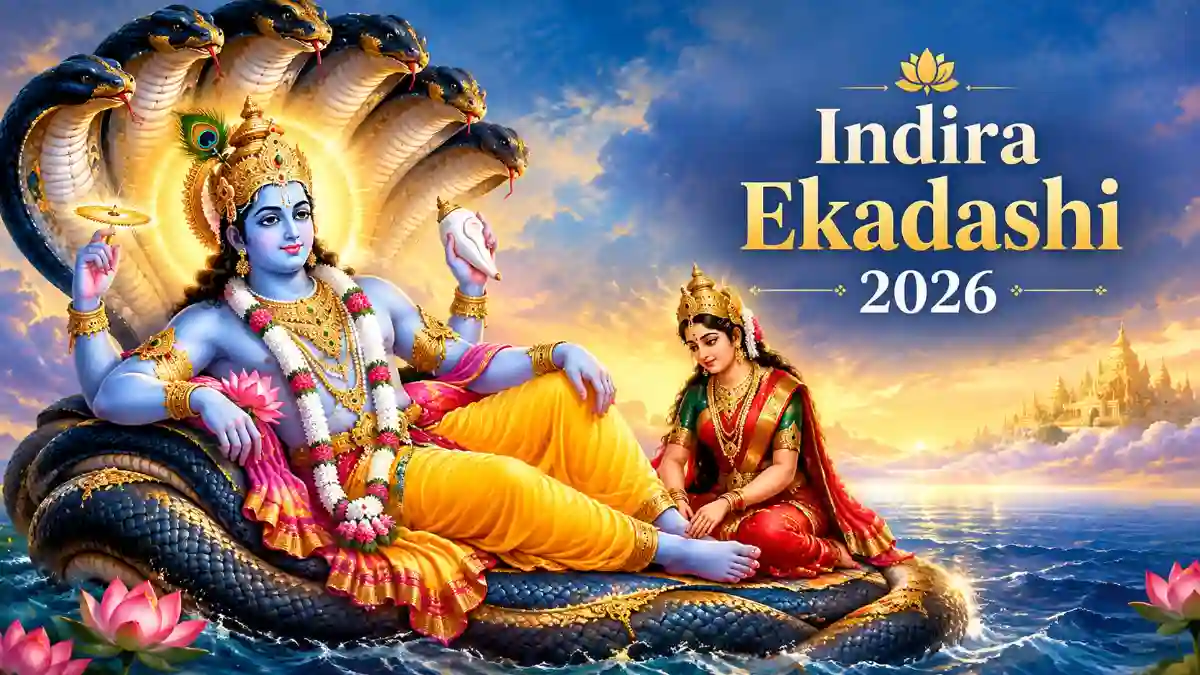
Indira Ekadashi 2026 will be observed on Tuesday, October 6, 2026. It falls during Krishna Paksha Ekadashi of the Ashwin month and occurs during Pitru Paksha, the traditional fortnight dedicated to remembering and offering prayers for ancestors.
According to the traditional Hindu calendar, Indira Ekadashi is associated with Lord Vishnu and is especially connected with prayers for departed ancestors. The vrat katha tells the story of King Indrasena, who observed Indira Ekadashi and dedicated the spiritual merit of the vrata for the benefit of his father.
For Mumbai, the Ekadashi Tithi begins at 2:07 AM on October 6 and ends at 12:34 AM on October 7. The Parana, or breaking of the fast, is observed on Wednesday, October 7, 2026, after sunrise. Exact Parana timings can vary by location, so devotees should use their local Panchang for their city.
Indira Ekadashi 2026 Date and Time
| Event | Date and Time |
|---|---|
| Indira Ekadashi | Tuesday, October 6, 2026 |
| Paksha | Krishna Paksha |
| Lunar month | Ashwin |
| Ekadashi Tithi begins | October 6 at 2:07 AM |
| Ekadashi Tithi ends | October 7 at 12:34 AM |
| Parana date | Wednesday, October 7, 2026 |
| Mumbai Parana window | Approximately 6:30 AM–8:53 AM |
| Dwadashi ends | October 7 at 11:16 PM |
| Main deity | Lord Vishnu |
| Observance | Ekadashi fasting and Vishnu worship |
| Special connection | Pitru Paksha and prayers for ancestors |
Note: The above Tithi and Mumbai timings are location-specific Panchang calculations. The Ekadashi date remains October 6, but sunrise and Parana timings change according to location.
When Is Indira Ekadashi in 2026?
Indira Ekadashi will be observed on Tuesday, October 6, 2026.
The Ekadashi Tithi begins at 2:07 AM on October 6 and ends at 12:34 AM on October 7 in the Mumbai calculation. Therefore, the fasting day is October 6.
Indira Ekadashi is the Krishna Paksha Ekadashi of Ashwin and falls within the period traditionally observed as Pitru Paksha.
Why Is Indira Ekadashi Important?
Indira Ekadashi has a special place among Ekadashi observances because its traditional story is closely connected with Pitru Paksha and the welfare of ancestors.
The traditional account describes how King Indrasena learned from Sage Narada that his deceased father was experiencing suffering in Yamaloka. Narada advised the king to observe Indira Ekadashi and dedicate the merit of the vrata to his father.
The king followed the prescribed observances, and according to the katha, his father was released from his difficult state.
Because of this story, devotees traditionally observe Indira Ekadashi with:
- Fasting
- Lord Vishnu worship
- Recitation or listening to the Indira Ekadashi Vrat Katha
- Tulasi worship
- Prayer for departed ancestors
- Charity and religious activities
- Remembering and honoring family ancestors
The story is found in traditional Puranic literature, including the account of Indira Ekadashi in the Padma Purana.
Indira Ekadashi and Pitru Paksha
Pitru Paksha is traditionally observed as a period for remembering departed family members and performing rituals such as Shraddha and Tarpana according to family tradition.
Indira Ekadashi provides an additional occasion for devotees to worship Lord Vishnu and pray for their ancestors.
It is important to distinguish between different practices:
- Ekadashi Vrat is primarily a devotional observance associated with Lord Vishnu.
- Shraddha and Tarpana are traditional ancestral rites and may follow separate rules.
- Families may follow different regional, sectarian, or family traditions.
- A person performing ancestral rituals should follow the method prescribed by their family tradition or knowledgeable priest.
The belief that observing Indira Ekadashi benefits departed ancestors comes from the traditional religious account of the vrata rather than from a scientifically verifiable claim.
Indira Ekadashi 2026 Parana Time
Parana means breaking the Ekadashi fast.
For the Mumbai calculation, Indira Ekadashi Parana is on Wednesday, October 7, 2026, approximately between 6:30 AM and 8:53 AM.
The traditional rule is to break the fast after sunrise on Dwadashi and within the appropriate Parana period. The timing should not simply be treated as a universal clock time because sunrise differs from city to city.
Why Is Parana Timing Important?
Ekadashi fasting is traditionally followed by Parana on Dwadashi.
Traditional Panchang rules take into account:
- Sunrise on the Parana day
- Dwadashi Tithi
- The end of Hari Vasara
- The appropriate period for breaking the fast
- The devotee’s location
According to traditional Ekadashi rules, Parana should generally be avoided during Hari Vasara, which is the first portion of Dwadashi.
If Dwadashi ends before sunrise in a particular observance, the Parana calculation can become more complicated. Therefore, devotees should use a location-specific Panchang rather than applying another city’s timing.
Indira Ekadashi 2026 Parana in Major Indian Cities
The exact Parana time varies because sunrise is different across India.
For example, Panchang calculations show different Parana windows for different cities. In Bihar, the Parana period begins earlier than in Mumbai because of the difference in local sunrise.
| City | Indira Ekadashi | Parana Day |
|---|---|---|
| Mumbai | October 6, 2026 | October 7 |
| Patna | October 6, 2026 | October 7 |
| Gaya | October 6, 2026 | October 7 |
| Kolkata | October 6, 2026 | October 7 |
| Varanasi | October 6, 2026 | October 7 |
| Pune | October 6, 2026 | October 7 |
| Delhi | October 6, 2026 | October 7 |
| Bengaluru | October 6, 2026 | October 7 |
| Hyderabad | October 6, 2026 | October 7 |
| Chennai | October 6, 2026 | October 7 |
Important: Do not use the Mumbai Parana time if you live in another city. The date is the same, but the exact Parana window depends on the local Panchang.
Indira Ekadashi Vrat Vidhi
Devotees can follow the following traditional sequence for Indira Ekadashi. Specific rituals may differ according to family and regional traditions.
1. Prepare on Dashami
The preparation begins on Dashami, the day before Ekadashi.
Traditionally, devotees:
- Take a bath and maintain cleanliness.
- Eat a simple vegetarian meal.
- Avoid foods that are prohibited during their Ekadashi tradition.
- Keep the mind focused on devotional activities.
- Avoid unnecessary indulgence.
- Prepare for the next day’s fast.
Some traditional versions of the Indira Ekadashi Katha describe performing ancestral rites on Dashami before observing the Ekadashi fast.
2. Take a Sankalpa
On Ekadashi morning, take a bath and make a personal Sankalpa to observe the Indira Ekadashi fast.
The Sankalpa can be made according to one’s family or religious tradition.
A simple intention may be:
“I undertake the Indira Ekadashi vrata with devotion to Lord Vishnu and pray for the spiritual well-being of my family and ancestors.”
3. Worship Lord Vishnu
After bathing, clean the place of worship and worship Lord Vishnu.
Common offerings include:
- Water
- Flowers
- Tulasi leaves
- Incense
- Lamp
- Fruits
- Naivedya appropriate for Ekadashi fasting
Tulasi is traditionally associated with Lord Vishnu and is commonly offered during Vishnu worship.
4. Observe the Fast
Devotees observe different levels of fasting depending on their health, age, tradition and personal capacity.
Common forms include:
- Nirjala: complete fasting without water
- Jala-based fasting: water is taken
- Phalahara: fruits and suitable fasting foods
- Ekadashi food: permitted non-grain foods
Nirjala fasting should not be attempted simply because it is considered more difficult. People with medical conditions, older adults, pregnant women, children and anyone taking regular medication should follow appropriate health advice rather than undertaking a restrictive fast without professional guidance.
5. Read or Listen to Indira Ekadashi Katha
Reading or listening to the Indira Ekadashi Vrat Katha is an important devotional part of the observance.
The story centers on King Indrasena, Sage Narada and the king’s father.
6. Pray for Ancestors
Because Indira Ekadashi occurs during Pitru Paksha, devotees may offer prayers for departed ancestors.
If your family tradition includes Shraddha or Tarpana, follow those rituals according to the appropriate family and regional customs.
7. Perform Vishnu Bhajan or Japa
Devotees may spend time in:
- Vishnu Sahasranama
- Vishnu mantras
- Bhagavad Gita reading
- Bhajan
- Meditation
- Listening to devotional stories
8. Break the Fast on Dwadashi
The fast is traditionally broken on Dwadashi, after sunrise and during the appropriate Parana period.
Avoid delaying Parana unnecessarily when the prescribed Dwadashi Parana period is available.
What to Eat on Indira Ekadashi?
Food rules vary among communities and families, but Ekadashi fasting traditionally avoids grains and certain other foods.
Common fasting foods include:
- Fruits
- Milk and dairy products where permitted
- Sabudana
- Potatoes
- Sweet potatoes
- Singhara flour
- Rajgira
- Kuttu flour
- Nuts
- Coconut
- Water
Commonly avoided foods include:
- Rice
- Wheat
- Regular flour
- Bread
- Chapati made from wheat
- Other grains
- Pulses and legumes
Packaged fasting foods should also be checked carefully because ingredients may vary.
The safest approach is to follow the food rules used by your family or religious tradition rather than assuming every “vrat food” is acceptable for every Ekadashi.
What Should Not Be Done on Indira Ekadashi?
Devotees traditionally try to maintain a devotional and disciplined lifestyle throughout the day.
Commonly avoided activities include:
- Eating prohibited grains
- Excessive entertainment
- Intoxication
- Anger and unnecessary arguments
- Dishonest or harmful conduct
- Excessive sleep or indulgence
- Actions that conflict with one’s religious observance
The purpose of the vrata is traditionally understood as self-discipline, devotion and remembrance of Lord Vishnu rather than simply avoiding food.
Indira Ekadashi Vrat Katha
The traditional story of Indira Ekadashi is associated with King Indrasena of Mahishmati.
According to the traditional account, King Indrasena was a devoted worshipper of Lord Vishnu and ruled his kingdom with prosperity and righteousness.
One day, Sage Narada arrived at the king’s court.
Narada told King Indrasena that he had encountered the king’s deceased father in the realm of Yama. Although the father had performed many good deeds, he was experiencing the consequences of past actions.
The king was deeply distressed and asked Narada how he could help his father.
Narada then instructed him to observe Indira Ekadashi during the Krishna Paksha of Ashwin and dedicate the merit of the vrata to his father.
King Indrasena followed the instructions and observed the Ekadashi with devotion.
According to the katha, the merit of the vrata helped his father leave his difficult state and attain a higher spiritual destination.
The story concludes by emphasizing the religious merit traditionally associated with Indira Ekadashi and the importance of faithfully observing one’s vow.
The narrative is recorded in traditional Puranic literature; versions of the story differ somewhat in wording and ritual details.
Indira Ekadashi Puja Samagri
A simple Vishnu puja can be prepared with commonly available items.
| Puja Item | Purpose |
|---|---|
| Lord Vishnu image or idol | Main deity |
| Tulasi leaves | Traditional Vishnu offering |
| Water | Puja and purification |
| Flowers | Offering |
| Diya | Lamp |
| Incense | Traditional worship |
| Fruits | Naivedya |
| Coconut | Traditional offering |
| Panchamrit | Abhisheka where customary |
| Akshata | Traditional puja item |
| Sandalwood | Tilak and offering |
| Clean cloth | For the puja setup |
The complete list does not need to be identical in every household. Follow your family’s established puja tradition where applicable.
Indira Ekadashi Mantra
Devotees may chant a Vishnu mantra during the vrata.
A commonly recited mantra is:
ॐ नमो भगवते वासुदेवाय
Om Namo Bhagavate Vasudevaya
It may be repeated during morning worship, meditation or throughout the day according to one’s practice.
Devotees may also recite Vishnu Sahasranama or other Vishnu prayers.
Indira Ekadashi and Shraddha
Indira Ekadashi occurs during Pitru Paksha, so it is important to understand the relationship between the two observances.
Indira Ekadashi does not automatically replace every ancestral ritual prescribed by one’s family tradition.
A family may observe:
- Shraddha
- Tarpana
- Pinda offerings
- Charity
- Vishnu worship
- Ekadashi fasting
- Prayer for departed ancestors
The exact combination depends on family tradition, region and religious practice.
If you are performing formal Shraddha, it is preferable to follow the instructions of the priest or tradition your family normally follows.
Who Can Observe Indira Ekadashi Vrat?
The vrata can be observed by devotees who choose to follow the Ekadashi tradition.
However, fasting should be adapted to individual circumstances.
People who should exercise particular caution with fasting include:
- Children
- Older adults
- Pregnant women
- People with diabetes
- People with kidney or other chronic conditions
- People taking regular medication
- Anyone who has previously experienced problems while fasting
Religious fasting does not require someone to put their health at risk. A person unable to undertake a complete fast may choose a simpler devotional observance according to their tradition.
Indira Ekadashi 2026: Ekadashi vs ISKCON Date
Different traditions can sometimes follow different Ekadashi observance rules.
For 2026, the ISKCON Ekadashi calendar also lists Indira Ekadashi on October 6, 2026. Location-specific ISKCON calculations show that the exact Parana time changes according to the city.
Therefore, devotees following a particular Vaishnava or ISKCON calendar should follow that tradition’s published fasting and Parana rules rather than combining timings from different Panchangs.
Indira Ekadashi 2026 at a Glance
| Detail | Information |
|---|---|
| Festival | Indira Ekadashi |
| Year | 2026 |
| Date | October 6, 2026 |
| Day | Tuesday |
| Paksha | Krishna Paksha |
| Month | Ashwin |
| Tithi | Ekadashi |
| Deity | Lord Vishnu |
| Special period | Pitru Paksha |
| Main observance | Ekadashi fasting |
| Katha | King Indrasena and Sage Narada |
| Parana | October 7, 2026 |
| Parana location | Must be calculated according to local city |
| Next Ekadashi | Papankusha Ekadashi, October 22, 2026 |
FAQ About Indira Ekadashi 2026
Indira Ekadashi will be observed on Tuesday, October 6, 2026.
For Mumbai, the Parana is on October 7, 2026, approximately from 6:30 AM to 8:53 AM. The exact time differs by location.
Indira Ekadashi occurs during Pitru Paksha and its traditional katha specifically connects the vrata with prayers for the welfare of departed ancestors.
Traditional Ekadashi fasting generally avoids rice and other grains. Devotees who observe the fast commonly choose fruits and permitted fasting foods instead.
King Indrasena was the ruler of Mahishmati in the traditional Indira Ekadashi story. Sage Narada advised him to observe Indira Ekadashi and dedicate its merit for his deceased father.
No. Pitru Paksha is a broader period traditionally dedicated to ancestral remembrance, while Indira Ekadashi is a specific Ekadashi observance that falls during that period.
