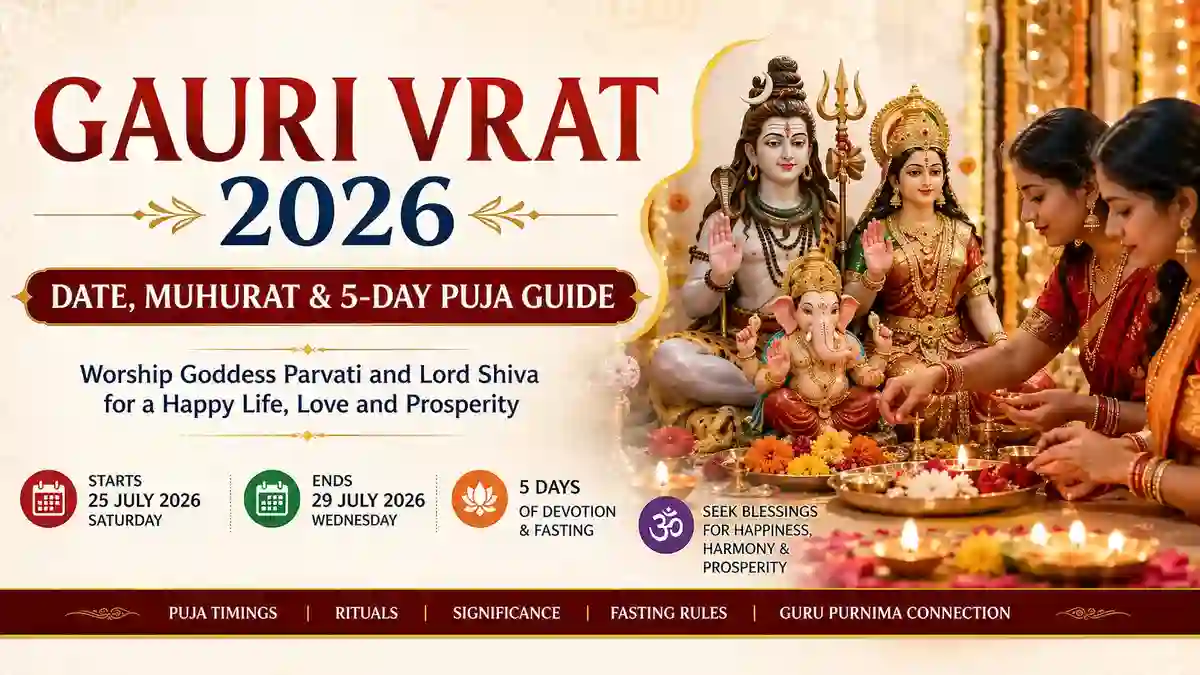
Gauri Vrat 2026 is a sacred five-day Hindu festival dedicated to Goddess Parvati, the divine consort of Lord Shiva. The vrat is observed with great devotion, especially by unmarried girls who pray for an ideal life partner, while many married women also worship Maa Gauri for a happy, peaceful, and prosperous married life.
Celebrated during the holy month of Ashadha, Gauri Vrat begins on Shukla Paksha Ekadashi and concludes on Ashadha Purnima, the same day that is observed as Guru Purnima. During these five days, devotees perform daily worship of Goddess Parvati, Lord Shiva, and Lord Ganesha, observe fasting according to family traditions, and seek blessings for love, happiness, and family well-being.
Gauri Vrat 2026 Date
According to the Hindu Panchang, Gauri Vrat 2026 will begin on Saturday, 25 July 2026, and continue for five days before concluding on Wednesday, 29 July 2026.
Gauri Vrat 2026 Schedule
| Event | Date |
|---|---|
| Gauri Vrat Begins | Saturday, 25 July 2026 |
| Jaya Parvati Vrat | Monday, 27 July 2026 |
| Gauri Vrat Ends | Wednesday, 29 July 2026 |
| Festival Duration | 5 Days |
Ekadashi Tithi
- Begins: 24 July 2026 at 9:12 AM
- Ends: 25 July 2026 at 11:34 AM
As the festival follows the Udaya Tithi (sunrise rule), Gauri Vrat is observed on 25 July 2026.
Gauri Vrat 2026 Muhurat
Devotees generally perform Gauri Puja during the morning after taking a holy bath. Worship may also be performed during other auspicious periods of the day according to the local Panchang.
Many devotees begin the first day’s worship during Brahma Muhurta or after sunrise, offering flowers, fruits, lamps, and prayers to Goddess Parvati and Lord Shiva.
What is Gauri Vrat?
Gauri Vrat is one of the most important fasting festivals dedicated to Maa Gauri, a revered form of Goddess Parvati. The festival symbolizes purity, devotion, patience, and unwavering faith.
Although the vrat is celebrated in different parts of India, it is especially popular in Gujarat, where thousands of young girls observe the five-day fast with great enthusiasm. In Gujarat, the festival is also known as Morakat Vrat (Molakat Vrat).
Why is Gauri Vrat Celebrated?
According to Hindu tradition, Goddess Parvati performed intense penance to win Lord Shiva as her husband. Her dedication, determination, and unwavering devotion are remembered through Gauri Vrat.
Inspired by this divine story, devotees worship Maa Gauri and Lord Shiva to seek blessings for:
- A suitable life partner
- Happy married life
- Family harmony
- Good health
- Prosperity
- Spiritual growth
Who Observes Gauri Vrat?
Gauri Vrat is mainly observed by unmarried girls who pray for an ideal husband with qualities similar to Lord Shiva.
However, married women also keep this vrat for:
- Long life of their husbands
- Peace in the family
- Marital happiness
- Prosperity and well-being
Many families observe the festival together by performing daily prayers and evening aarti.
Five-Day Gauri Vrat Rituals
The festival continues for five consecutive days.
Day 1
The house and puja area are cleaned before sunrise. Devotees take a holy bath and install idols or images of Goddess Parvati, Lord Shiva, and Lord Ganesha. The first day’s worship begins with prayers, flowers, incense, lamps, and offerings of fruits.
Day 2
Devotees continue fasting and offer fresh flowers and seasonal fruits. Many families read stories related to Maa Gauri and chant Shiva mantras.
Day 3
Special prayers are offered for family happiness and fulfillment of wishes. Evening aarti and devotional songs are performed in many homes.
Day 4
The fourth day is dedicated to continued worship, meditation, and maintaining the discipline of the vrat. Devotees pray for wisdom, patience, and positive energy.
Day 5
On the final day, which coincides with Guru Purnima, devotees perform the concluding puja, offer prayers, complete the vrat, and seek blessings from Goddess Parvati, Lord Shiva, and their spiritual teachers.
Puja Samagri
The following items are commonly used during Gauri Vrat Puja:
- Idol or picture of Goddess Gauri
- Shivling or image of Lord Shiva
- Lord Ganesha idol
- Kumkum
- Turmeric
- Akshat (rice)
- Sandalwood paste
- Fresh flowers
- Betel leaves
- Coconut
- Fruits
- Sweets
- Incense sticks
- Ghee lamp
- Holy water
Fasting Rules
Fasting traditions differ from one family to another.
Some devotees observe a complete fast, while others consume fruits, milk, or simple satvik meals once a day. During the vrat, devotees usually avoid onion, garlic, non-vegetarian food, and intoxicating substances.
The primary focus of Gauri Vrat is sincere devotion, self-discipline, and regular worship rather than strict dietary rules alone.
Spiritual Significance
Goddess Parvati represents strength, compassion, patience, and unconditional devotion. Worshipping Maa Gauri during these five days is believed to inspire these same virtues in the lives of devotees.
The festival also celebrates the sacred union of Lord Shiva and Goddess Parvati, symbolizing mutual respect, faith, and lifelong companionship.
Gauri Vrat and Guru Purnima
An important aspect of Gauri Vrat is that it concludes on Guru Purnima, making the final day even more spiritually meaningful.
Guru Purnima is dedicated to expressing gratitude toward teachers and spiritual guides. Many devotees complete their vrat after offering prayers not only to Maa Gauri and Lord Shiva but also to their gurus and elders.
Interesting Facts About Gauri Vrat
- Gauri Vrat lasts for five consecutive days.
- It begins on Ashadha Shukla Ekadashi.
- The festival concludes on Ashadha Purnima (Guru Purnima).
- It is especially popular in Gujarat.
- Gauri Vrat is also known as Morakat Vrat.
- Lord Shiva, Goddess Parvati, and Lord Ganesha are worshipped together during the festival.
Frequently Asked Questions
Gauri Vrat begins on 25 July 2026 and ends on 29 July 2026.
The festival is observed for five days.
The vrat is mainly observed by unmarried girls, although married women also observe it for marital happiness and family well-being.
It honors the devotion of Goddess Parvati toward Lord Shiva and is believed to bring blessings for love, marriage, prosperity, and peace.
While it is most popular in Gujarat, devotees in other parts of India also worship Goddess Parvati during this sacred observance.
Disclaimer: The dates and timings mentioned above are based on Hindu Panchang calculations and may vary slightly depending on your location and regional calendar. Always consult your local Panchang or temple for city-specific muhurat.
