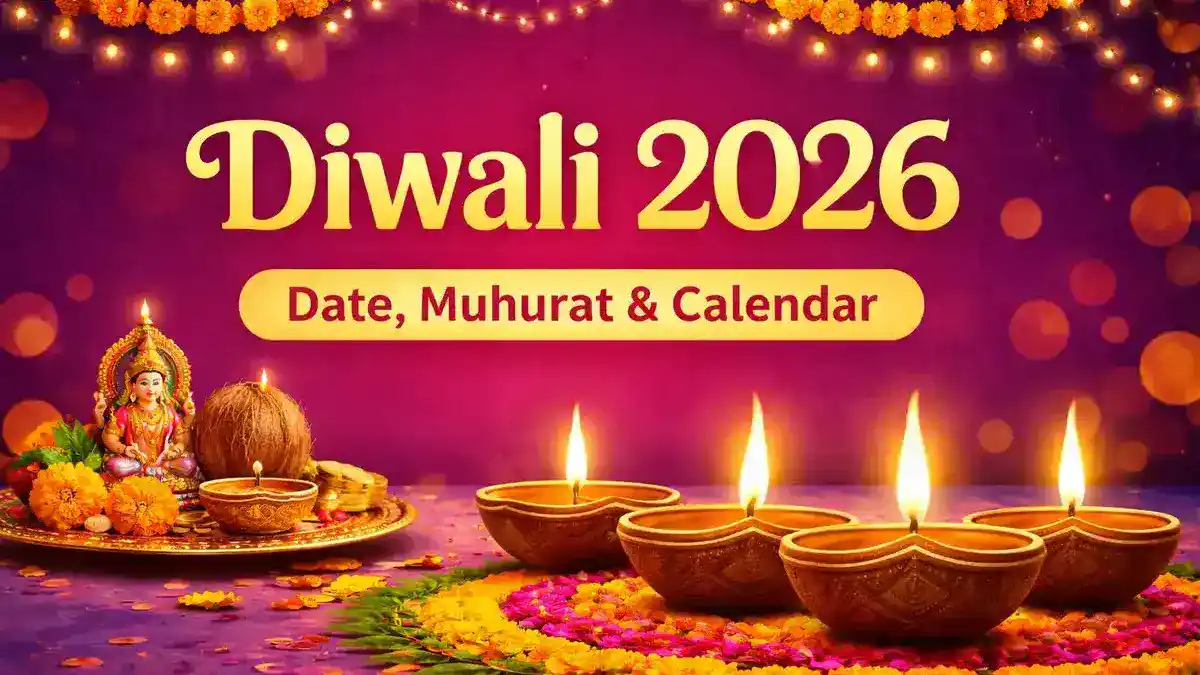
Diwali 2026, also known as Deepavali, is one of the biggest and most celebrated Hindu festivals in India and across the world. The festival marks the victory of light over darkness, good over evil, and knowledge over ignorance. Families celebrate Diwali by decorating their homes with diyas, performing Lakshmi Puja, preparing festive sweets, exchanging gifts, and spending time with loved ones.
Diwali 2026 will be celebrated on Sunday, 8 November 2026. The main festival falls on Kartik Amavasya, which is considered the most auspicious day for worshipping Goddess Lakshmi and Lord Ganesha.
Diwali 2026 Date
The Diwali 2026 date in India is Sunday, 8 November 2026.
Every year, the date of Diwali changes because the festival is determined according to the Hindu lunar calendar rather than the Gregorian calendar. Diwali is celebrated on the Amavasya (new moon day) of the month of Kartik, making it one of the most sacred days in Hindu tradition.
On this day, millions of devotees perform Lakshmi Puja in the evening, light oil lamps inside and outside their homes, decorate entrances with rangoli, visit temples, and celebrate with family and friends.
When is Diwali 2026 in India?
Diwali 2026 will be celebrated on Sunday, 8 November 2026.
The festival falls on the Kartik Amavasya Tithi, which is regarded as the most auspicious time for seeking the blessings of Goddess Lakshmi, the goddess of wealth, prosperity, and abundance.
Across India, people begin preparations several days before the festival by cleaning and decorating their homes, purchasing new clothes, shopping for gold or silver, and preparing traditional sweets.
Diwali 2026 According to the Hindu Calendar
| Detail | Information |
|---|---|
| Festival | Diwali (Deepavali) |
| Hindu Month | Kartik |
| Paksha | Krishna Paksha |
| Tithi | Amavasya |
| Day | Sunday |
| Gregorian Date | 8 November 2026 |
Although the festival is celebrated across India, the exact customs and traditions may vary from one state to another.
Why is Diwali So Late in 2026?
Many people notice that Diwali sometimes falls in October while in other years it is celebrated in November. This often creates confusion.
In 2026, Diwali falls on 8 November, which is later than many previous years.
The reason is that Hindu festivals follow the lunisolar calendar instead of a fixed solar calendar. Diwali is celebrated only when the Kartik Amavasya occurs, and the date of this lunar phase changes every year.
As a result:
- Diwali does not have a fixed Gregorian calendar date.
- It can occur anytime between late October and mid-November.
- In 2026, Kartik Amavasya arrives on 8 November, making it the official Diwali date.
This is also why Dussehra and Diwali are celebrated about three weeks apart in 2026.
Dussehra and Diwali 2026 Festival Timeline
Dussehra marks the victory of Lord Rama over Ravana, while Diwali celebrates Lord Rama’s return to Ayodhya after completing his fourteen years of exile. Together, these festivals form one of the most important festive seasons in the Hindu calendar.
The complete timeline for the festive period is as follows:
| Festival | Date | Day |
|---|---|---|
| Dussehra | 20 October 2026 | Tuesday |
| Dhanteras | 6 November 2026 | Friday |
| Choti Diwali | 7 November 2026 | Saturday |
| Diwali (Lakshmi Puja) | 8 November 2026 | Sunday |
| Govardhan Puja | 9 November 2026 | Monday |
| Bhai Dooj | 10 November 2026 | Tuesday |
This five-day celebration brings together families, communities, and devotees in prayers, festive meals, charitable acts, and cultural traditions.
Diwali 2026 How Many Days Left?
You can use the live countdown timer on this page to see the exact number of months, days, hours, minutes, and seconds remaining until the festival.
Diwali 2026 Date: Sunday, 8 November 2026
The countdown is especially useful for planning:
- Festival shopping
- Home decoration
- Travel arrangements
- Lakshmi Puja preparations
- Gift purchases
- Family gatherings
As the festival approaches, the countdown updates automatically, making it easy to keep track of the remaining time.
Diwali 2026 Date: Sunday, 8 November 2026
Diwali 2026 Lakshmi Puja Muhurat
Lakshmi Puja is the most important ritual of Diwali. Devotees worship Goddess Lakshmi and Lord Ganesha during the evening Pradosh Kaal, seeking blessings for prosperity, happiness, success, and good fortune.
Lakshmi Puja Muhurat (India)
| Muhurat | Time |
|---|---|
| Lakshmi Puja Muhurat | 5:54 PM – 7:50 PM |
| Pradosh Kaal | 5:31 PM – 8:09 PM |
| Amavasya Tithi Begins | 11:27 AM, 8 November 2026 |
| Amavasya Tithi Ends | 12:31 PM, 9 November 2026 |
These timings are general references for India. Since sunrise and sunset differ from city to city, the exact puja timing may vary slightly depending on your location. It is always advisable to follow the local Panchang for city-specific Muhurat timings.
Why is Lakshmi Puja Performed During Pradosh Kaal?
According to Hindu tradition, the period just after sunset, known as Pradosh Kaal, is considered the most auspicious time to worship Goddess Lakshmi. Performing the puja during this period is believed to invite prosperity, peace, and positive energy into the home.
During the puja, devotees typically:
- Place idols or pictures of Goddess Lakshmi and Lord Ganesha.
- Light diyas throughout the home.
- Offer flowers, sweets, fruits, and coins.
- Chant Lakshmi mantras and perform the evening aarti.
- Pray for wealth, good health, and family happiness.
Diwali 2026 Tithi Calendar
Understanding the sequence of tithis helps explain why each day of the Diwali festival has its own religious significance.
| Tithi | Festival | Date |
|---|---|---|
| Trayodashi | Dhanteras | 6 November 2026 |
| Chaturdashi | Naraka Chaturdashi (Choti Diwali) | 7 November 2026 |
| Amavasya | Diwali and Lakshmi Puja | 8 November 2026 |
| Pratipada | Govardhan Puja | 9 November 2026 |
| Dwitiya | Bhai Dooj | 10 November 2026 |
Each of these five days has unique rituals and traditions that are observed across different regions of India. In the next section, we will explore the significance of every day of the five-day Diwali festival, its religious importance, and the customs followed by millions of devotees.
The 5 Days of Diwali 2026
Diwali is not a one-day festival. It is a five-day celebration filled with religious rituals, family traditions, and cultural significance. Each day has its own importance and is associated with different deities, customs, and beliefs.
The five days of Diwali 2026 begin on Friday, 6 November, and conclude on Tuesday, 10 November 2026.
Day 1: Dhanteras – Friday, 6 November 2026
Dhanteras marks the beginning of the Diwali festival. The word "Dhan" means wealth, while "Teras" refers to the thirteenth lunar day (Trayodashi) of Krishna Paksha in the month of Kartik.
On this day, devotees worship Lord Dhanvantari, the divine physician, and Goddess Lakshmi to seek blessings for health, prosperity, and financial well-being.
Many families consider Dhanteras one of the most auspicious days to purchase:
- Gold and silver jewellery
- Coins and precious metals
- Kitchen utensils
- Vehicles
- Home appliances
- Business equipment
In many homes, people also light the first diya of the festive season and begin decorating their houses with lights and rangoli.
Day 2: Naraka Chaturdashi (Choti Diwali) – Saturday, 7 November 2026
The second day of the festival is known as Naraka Chaturdashi or Choti Diwali.
According to Hindu tradition, Lord Krishna defeated the demon Narakasura on this day, freeing thousands of imprisoned people and ending his reign of terror. Because of this victory, the day symbolizes the triumph of righteousness over evil.
Common traditions include:
- Taking an early morning oil bath
- Wearing new clothes
- Lighting diyas
- Decorating homes
- Offering prayers
- Preparing festive meals
In many South Indian states, this day is considered the main day for Diwali celebrations.
Day 3: Diwali (Lakshmi Puja) – Sunday, 8 November 2026 Tithi
The third day is the main festival of Diwali and is celebrated across India with immense joy and devotion.
On the evening of Kartik Amavasya, families perform Lakshmi Puja to welcome Goddess Lakshmi into their homes. Lord Ganesha is also worshipped alongside Goddess Lakshmi for wisdom and the removal of obstacles.
The evening is marked by:
- Lighting rows of diyas
- Decorating homes with rangoli
- Performing Lakshmi and Ganesha Puja
- Visiting relatives and friends
- Exchanging gifts and sweets
- Community celebrations
- Illuminating temples and streets
For many families, this is the most important spiritual celebration of the year.
Day 4: Govardhan Puja – Monday, 9 November 2026
Govardhan Puja is observed on the day after Diwali.
The festival commemorates Lord Krishna lifting Govardhan Hill to protect the people of Vrindavan from heavy rains sent by Lord Indra.
Devotees prepare a large variety of vegetarian dishes known as Annakut (mountain of food) and offer them to Lord Krishna in temples and homes.
The day teaches important values such as gratitude toward nature, humility, and faith.
Day 5: Bhai Dooj – Tuesday, 10 November 2026
Bhai Dooj concludes the five-day Diwali festival.
The celebration honors the loving relationship between brothers and sisters. Sisters apply a ceremonial tilak on their brothers' foreheads and pray for their long life, happiness, and prosperity.
In return, brothers present gifts and promise to protect and support their sisters throughout life.
Although similar to Raksha Bandhan, Bhai Dooj has its own unique customs and religious significance.
Why is Diwali Celebrated?
Diwali is one of the oldest and most meaningful festivals in Hinduism. While many people associate it with the return of Lord Rama to Ayodhya, the festival has several religious and cultural traditions that have developed over thousands of years.
Different regions and communities celebrate Diwali for different reasons, making it a festival that represents unity within diversity.
The Return of Lord Rama to Ayodhya
One of the most widely known stories of Diwali comes from the Ramayana.
After defeating Ravana and completing fourteen years of exile, Lord Rama returned to Ayodhya along with Goddess Sita and Lord Lakshmana.
The people of Ayodhya welcomed them by lighting thousands of earthen lamps to celebrate the victory of good over evil and truth over injustice.
This tradition continues today as millions of homes are illuminated with diyas on Diwali night.
Worship of Goddess Lakshmi
For many devotees, Diwali is the day dedicated to Goddess Lakshmi, the goddess of wealth, prosperity, and abundance.
According to Hindu belief, Goddess Lakshmi emerged during the Samudra Manthan (the churning of the cosmic ocean). Since then, she has been worshipped as the divine source of prosperity and good fortune.
People clean their homes thoroughly before Diwali because it is believed that Goddess Lakshmi visits clean, well-lit, and welcoming homes on the night of Kartik Amavasya.
Lord Krishna and Narakasura
In several parts of southern India, Diwali is closely associated with Lord Krishna's victory over the demon Narakasura.
Narakasura had spread fear and suffering across many kingdoms. Lord Krishna defeated him on Naraka Chaturdashi, restoring peace and justice.
This victory symbolizes the destruction of arrogance, ignorance, and evil.
King Bali and Lord Vishnu
Another tradition connects Diwali with King Mahabali, a generous and righteous ruler.
According to legend, Lord Vishnu appeared as Vamana and humbled King Bali, while granting him permission to visit his people once every year.
In some regions, this story is remembered during the Diwali celebrations and especially around Govardhan Puja and Bali Pratipada.
Jain Tradition
For the Jain community, Diwali commemorates the attainment of Nirvana by Lord Mahavira, the twenty-fourth Tirthankara.
Jains observe the festival with prayers, meditation, acts of charity, and reflection on spiritual values.
Sikh Tradition
For Sikhs, the festival coincides with Bandi Chhor Divas, which celebrates the release of Guru Hargobind Ji from imprisonment along with fifty-two kings.
Gurdwaras are beautifully illuminated, and devotees gather for prayers, kirtan, and community service.
A Festival That Brings People Together
Although different communities celebrate Diwali with their own traditions and beliefs, the message remains universal.
The festival reminds people to:
- Choose truth over falsehood.
- Spread kindness and compassion.
- Strengthen family relationships.
- Help those in need.
- Begin new ventures with positivity.
- Celebrate hope, peace, and prosperity.
This timeless message is one of the reasons why Diwali continues to be celebrated by millions of people across India and around the world.
Diwali 2026 in Different States of India
Diwali is celebrated with great enthusiasm across India, but the customs, rituals, and traditions vary from state to state. While the central message of the festival remains the victory of light over darkness and good over evil, every region adds its own cultural identity to the celebrations.
Diwali 2026 in Tamil Nadu
One of the most searched questions is "Diwali 2026 date Tamil Nadu" or "Deepavali 2026 Tamil Nadu."
In Tamil Nadu, the main celebrations traditionally take place on Naraka Chaturdashi, which falls on Saturday, 7 November 2026. Families wake up before sunrise, take an oil bath, wear new clothes, burst crackers in the morning, and visit temples.
Unlike many parts of North India where Lakshmi Puja on Kartik Amavasya is the main event, Tamil Nadu places greater emphasis on the celebration of Lord Krishna's victory over Narakasura.
Important traditions include:
- Early morning oil bath
- Wearing traditional attire
- Offering prayers at home and temples
- Preparing festive sweets and snacks
- Visiting relatives and neighbours
- Bursting fireworks during the morning hours
Diwali 2026 in Karnataka
Karnataka celebrates Diwali over several days with equal importance given to Dhanteras, Naraka Chaturdashi, Lakshmi Puja, and Bali Padyami.
People decorate their homes with colourful rangoli, light diyas, prepare festive dishes, and perform family prayers. Traditional foods such as holige, chakli, laddoo, and payasam are commonly prepared during the festival.
Diwali 2026 in Andhra Pradesh and Telangana
In Andhra Pradesh and Telangana, Diwali celebrations begin with Naraka Chaturdashi.
Homes are cleaned and decorated several days in advance. Families perform Lakshmi Puja in the evening of Diwali, exchange gifts, and prepare festive sweets such as ariselu, boondi laddoo, kaja, and other regional delicacies.
Children eagerly participate by decorating homes and lighting diyas under adult supervision.
Diwali 2026 in Uttar Pradesh
Uttar Pradesh holds special significance because Diwali is closely associated with the return of Lord Rama to Ayodhya.
Cities and villages across the state are illuminated with millions of diyas. Temples remain crowded throughout the day, and families gather in the evening to perform Lakshmi and Ganesha Puja.
Ayodhya has become internationally known for its spectacular Deepotsav celebrations, where millions of earthen lamps are lit to recreate the welcome given to Lord Rama.
Diwali 2026 in Rajasthan
In Rajasthan, Diwali is considered one of the most important festivals for business communities.
Markets remain busy with shoppers purchasing jewellery, clothing, utensils, home décor, and festive gifts. Shopkeepers perform Lakshmi Puja and begin new account books as a symbol of prosperity and success.
Beautiful rangoli designs and illuminated havelis add to the festive atmosphere throughout the state.
Diwali 2026 in Punjab
In Punjab, Diwali coincides with the celebration of Bandi Chhor Divas.
The day commemorates the release of Guru Hargobind Sahib from imprisonment. Gurdwaras are beautifully decorated with lights, and special prayers, kirtan, and langar are organized for devotees.
Families also celebrate Diwali by lighting diyas, exchanging sweets, and visiting relatives.
Diwali 2026 in Gujarat
Diwali is one of the most significant festivals in Gujarat.
For traders and business owners, it marks the end of the financial year and the beginning of a new one. Chopda Pujan, the worship of new account books, is performed with great devotion.
People decorate their homes, prepare traditional sweets, and celebrate with family gatherings and community events.
Diwali 2026 in West Bengal
In West Bengal, Diwali night is primarily observed as Kali Puja.
Devotees worship Goddess Kali with elaborate rituals and beautifully decorated pandals. Homes and temples are illuminated with diyas and candles, creating a vibrant festive atmosphere across the state.
Diwali Puja Vidhi (Step-by-Step)
Performing Lakshmi Puja during Diwali is considered highly auspicious. The ritual symbolizes inviting prosperity, peace, and happiness into the home.
Although traditions may vary slightly from one family to another, the following steps are commonly followed.
Step 1: Clean the House
Cleaning the house before Diwali represents removing negativity and welcoming positive energy.
Pay special attention to:
- Entrance of the house
- Prayer room
- Living room
- Kitchen
- Windows and balconies
A clean and well-decorated home is believed to invite Goddess Lakshmi's blessings.
Step 2: Decorate the Home
Decorate your home with:
- Earthen diyas
- Flowers
- Torans
- Rangoli
- Decorative lights
Many families also place footprints of Goddess Lakshmi near the entrance as a symbol of her arrival.
Step 3: Prepare the Puja Area
Cover a wooden platform with a clean cloth and place:
- Goddess Lakshmi idol or image
- Lord Ganesha idol or image
- Kalash filled with water
- Rice
- Flowers
- Fruits
- Sweets
- Coins
- Panchamrit
Step 4: Light Diyas
Light diyas throughout the house before beginning the puja.
Traditionally, diyas are placed:
- At the entrance
- Near windows
- Around the prayer room
- In the courtyard
- On balconies
The light of the diyas symbolizes wisdom, hope, and the removal of darkness.
Step 5: Perform Lakshmi and Ganesha Puja
Offer:
- Flowers
- Kumkum
- Turmeric
- Rice
- Incense
- Diyas
- Naivedya (food offering)
Recite Lakshmi and Ganesha prayers with devotion.
Step 6: Perform Aarti
Conclude the puja with the aarti.
Family members gather together to sing devotional hymns and seek blessings for prosperity, health, and happiness.
Step 7: Distribute Prasad
After the puja, distribute sweets and prasad among family members, neighbours, and guests.
Sharing food during Diwali symbolizes generosity and togetherness.
Diwali Puja Samagri List
Before beginning the puja, gather all the required items.
Essential Puja Items
- Lakshmi idol or picture
- Ganesha idol or picture
- Wooden chowki
- Red cloth
- Kalash
- Coconut
- Mango leaves
- Kumkum
- Turmeric
- Akshat (rice)
- Sandalwood paste
- Betel leaves
- Betel nuts
- Incense sticks
- Camphor
- Cotton wicks
- Ghee or mustard oil
- Earthen diyas
- Flowers
- Garland
- Fresh fruits
- Sweets
- Dry fruits
- Coins
- Panchamrit
- Gangajal
Keeping all the puja materials ready beforehand allows the ceremony to be performed smoothly without interruption.
Do's and Don'ts on Diwali
Following a few simple practices can make your Diwali celebrations more meaningful and safe.
Do's
- Clean your home before the festival.
- Perform Lakshmi Puja during the auspicious Muhurat.
- Light diyas during the evening.
- Decorate the entrance with rangoli.
- Donate food or clothes to those in need.
- Spend quality time with family and friends.
- Follow local safety guidelines while using fireworks.
Don'ts
- Avoid unnecessary wastage of food.
- Do not leave burning diyas unattended.
- Avoid unsafe handling of fireworks.
- Do not disturb elderly people, infants, or animals with excessive noise.
- Avoid polluting public places after celebrations.
Diwali Shopping Guide 2026
Diwali is considered one of the most auspicious times of the year for shopping. Markets across India witness heavy demand for jewellery, electronics, home décor, clothing, and festive gifts.
Popular purchases during Diwali include:
Gold and Silver
Many families buy gold or silver on Dhanteras, believing it brings prosperity and good fortune.
Home Appliances
Diwali sales often include attractive offers on refrigerators, washing machines, televisions, and kitchen appliances.
Electronics
Smartphones, laptops, smartwatches, and other gadgets are among the most popular festive purchases.
Vehicles
Many people choose to buy new cars or two-wheelers during the festive season after performing a traditional vehicle puja.
Home Decoration
Decorative lights, diyas, lanterns, wall hangings, curtains, and festive décor items help create a joyful atmosphere for the celebrations.
Diwali Rangoli Ideas for 2026
Rangoli is an important part of Diwali celebrations. Beautiful patterns created with colours, flowers, rice flour, or petals decorate the entrance of homes and symbolize happiness, prosperity, and a warm welcome for Goddess Lakshmi.
Whether you are looking for simple Diwali rangoli designs or more artistic patterns, creating a rangoli before Lakshmi Puja adds beauty and positivity to your home.
Simple Diwali Rangoli Designs
If you are a beginner, choose easy designs that can be completed in less time.
Popular ideas include:
- Flower-shaped rangoli
- Circular rangoli
- Lotus design
- Diya pattern
- Swastik symbol
- Om design
- Border rangoli for doorways
These designs are suitable for homes, apartments, schools, and offices.
Creative Rangoli Designs
If you enjoy creating detailed artwork, consider larger and more colourful designs.
Popular options include:
- Peacock rangoli
- Lotus with diyas
- Floral mandala
- Radial geometric patterns
- Kalash design
- Lakshmi footprints
- Traditional Indian motifs
Fresh flower petals can also be used to create eco-friendly rangoli that looks elegant and festive.
Best Time to Make Rangoli
Most families prepare rangoli:
- On the morning of Diwali
- Before the evening Lakshmi Puja
- At the main entrance of the house
- Near the prayer room
- Around the courtyard or balcony
Keeping the rangoli clean and decorating it with diyas enhances its beauty during the evening.
Diwali Home Decoration Ideas
Decorating the home is one of the most enjoyable traditions of Diwali. A clean, bright, and welcoming house reflects the festive spirit and creates a joyful atmosphere for family and guests.
Traditional Decorations
Traditional decorations continue to remain the most popular choice.
You can decorate your home using:
- Earthen diyas
- Marigold flowers
- Mango leaf torans
- Decorative lanterns
- Brass lamps
- Traditional wall hangings
These decorations create a timeless festive appearance while preserving Indian cultural traditions.
Modern Decoration Ideas
Many families also combine traditional décor with modern lighting.
Popular choices include:
- LED string lights
- Decorative candles
- Floating candles
- Glass lanterns
- Fairy lights
- Decorative centrepieces
- Floral arrangements
A balanced combination of traditional and modern decorations creates a warm and elegant festive environment.
Eco-Friendly Diwali Celebration
In recent years, many families have chosen to celebrate Diwali in a more environmentally responsible way.
Small changes can help reduce pollution while preserving the joy and traditions of the festival.
Choose Earthen Diyas
Instead of plastic decorative items, use traditional clay diyas filled with oil or ghee. They are biodegradable and support local artisans.
Decorate with Flowers
Natural flowers, leaves, and reusable decorations are excellent alternatives to plastic decorations.
Use Eco-Friendly Rangoli
Prepare rangoli using:
- Flower petals
- Rice flour
- Turmeric
- Kumkum
- Natural colours
These materials are safe for the environment and easy to clean.
Avoid Excessive Fireworks
Fireworks are a part of Diwali celebrations for many families, but using them responsibly helps reduce air and noise pollution.
Always follow local regulations and prioritize safety while celebrating.
Share Happiness
Diwali is also an opportunity to help others.
Many people celebrate by:
- Donating food
- Supporting local artisans
- Helping charitable organizations
- Sharing clothes and blankets
- Feeding animals
- Assisting people in need
Acts of kindness reflect the true spirit of the festival.
Diwali Safety Tips
Safety should always remain a priority during Diwali celebrations.
Follow these simple precautions:
- Keep children under adult supervision.
- Wear cotton clothing while lighting diyas or fireworks.
- Keep a bucket of water or fire extinguisher nearby.
- Never leave burning diyas unattended.
- Avoid placing lamps near curtains or flammable materials.
- Store fireworks safely in a dry place.
- Keep first aid supplies readily available.
- Ensure electrical decorations are installed properly.
Simple precautions can help everyone enjoy a safe and memorable Diwali.
Diwali 2026 Calendar
The complete Diwali festival schedule for 2026 is given below.
| Festival | Date | Day |
|---|---|---|
| Dhanteras | 6 November 2026 | Friday |
| Choti Diwali | 7 November 2026 | Saturday |
| Diwali (Lakshmi Puja) | 8 November 2026 | Sunday |
| Govardhan Puja | 9 November 2026 | Monday |
| Bhai Dooj | 10 November 2026 | Tuesday |
Diwali Dates for the Next Five Years
Many people like to plan their holidays and celebrations in advance. Here are the upcoming Diwali dates.
| Year | Diwali Date | Day |
|---|---|---|
| 2026 | 8 November | Sunday |
| 2027 | 29 October | Friday |
| 2028 | 17 October | Tuesday |
| 2029 | 5 November | Monday |
| 2030 | 26 October | Saturday |
Whether you celebrate Diwali by performing Lakshmi Puja, decorating your home with diyas and rangoli, preparing festive sweets, visiting loved ones, or helping those in need, the festival serves as a reminder of hope, gratitude, compassion, and new beginnings.
As you prepare for Diwali 2026, plan your celebrations in advance, follow the auspicious Muhurat for Lakshmi Puja, and enjoy the festival responsibly with your family and community. May this Diwali bring happiness, good health, prosperity and peace to your home and loved ones.
Happy Diwali 2026.
Follow Us on Instagram
Frequently Asked Questions
A. November 8, 2026.
A. It falls on Kartik Amavasya – November 8.
A. No, that is Dussehra. Diwali is on November 8.
A. Around 5:54 PM to 7:50 PM.
A. Depends on current date, but it is in November.
