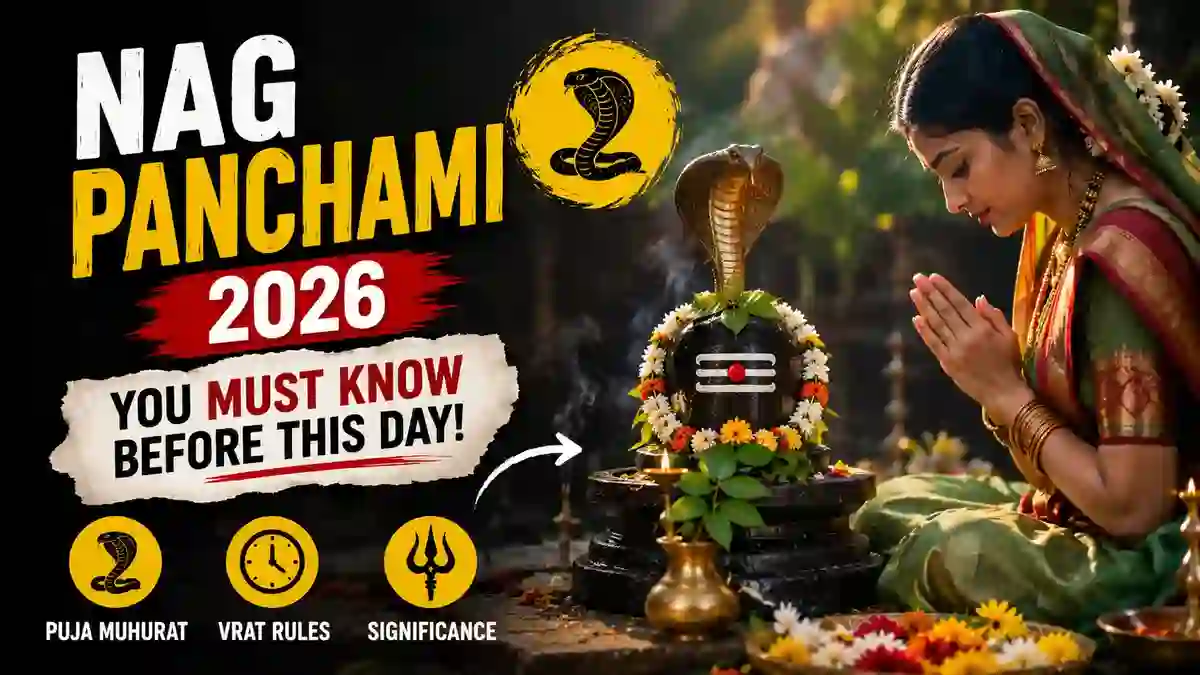
Nag Panchami is one of the most sacred Hindu festivals dedicated to Nag Devatas (Serpent Deities). The festival is celebrated every year on Shukla Paksha Panchami during the holy month of Shravan (Sawan). Devotees worship snakes and serpent deities to seek protection from negative energies, remove Sarpa Dosha, ensure family well-being, and pray for prosperity and good health.
In 2026, Nag Panchami falls on Monday, 17 August 2026 Tithi, making the occasion even more special as it coincides with the Third Shravan Somwar Vrat. Thousands of devotees visit Shiva temples and Nag temples, perform milk Abhishek, offer flowers and prayers, and observe fasting on this auspicious day.
Nag Panchami 2026 Date
| Festival | Date |
|---|---|
| Nag Panchami 2026 | Monday, 17 August 2026 |
Nag Panchami 2026 Puja Muhurat
According to the Panchang for Pune, Maharashtra:
| Muhurat | Time |
|---|---|
| Nag Panchami Puja Muhurat | 06:17 AM to 08:49 AM |
| Duration | 2 Hours 33 Minutes |
Panchami Tithi Timing
| Event | Time |
|---|---|
| Panchami Tithi Begins | 04:52 PM on 16 August 2026 |
| Panchami Tithi Ends | 05:00 PM on 17 August 2026 |
Nag Panchami 2026 Panchang
The important Panchang details for 17 August 2026 are:
| Panchang Element | Details |
|---|---|
| Sunrise | 06:17 AM |
| Sunset | 07:00 PM |
| Moonrise | 10:24 AM |
| Moonset | 10:01 PM |
| Tithi | Shukla Panchami till 05:00 PM |
| Next Tithi | Shukla Shashthi |
| Nakshatra | Chitra till 04:58 AM (18 Aug), then Swati |
| Yoga | Shubha |
| Karana | Balava till 05:00 PM |
| Weekday | Monday (Somwar) |
| Paksha | Shukla Paksha |
| Lunar Month | Shravana |
Important Festivals on 17 August 2026
Nag Panchami 2026 is celebrated alongside several important Hindu observances, including:
- Nag Panchami
- Third Shravan Somwar Vrat
- Simha Sankranti
- First Chaturmasa Day 24
- Skanda Sashti
- Ravi Yoga
- Malayalam New Year
The combination of these observances makes the day especially significant for Shiva devotees.
What is Nag Panchami?
Nag Panchami is a traditional Hindu festival dedicated to the worship of serpent deities, who are considered divine protectors in Hinduism. Snakes symbolize fertility, protection, hidden wisdom, transformation, and the balance of nature.
The festival is observed across India with different regional customs, but the central belief remains the same—offering prayers to Nag Devatas brings blessings, protects the family, and removes obstacles caused by serpent-related doshas.
Nag Panchami usually falls two days after Hariyali Teej during the holy month of Shravan, a month especially dedicated to Lord Shiva.
Why Are Snakes Worshipped on Nag Panchami?
In Hindu tradition, snakes hold a sacred place and are closely associated with several deities.
Some well-known examples include:
- Lord Shiva wears Vasuki around His neck.
- Lord Vishnu rests upon Sheshnag.
- Lord Subramanya (Kartikeya) is also connected with serpent worship.
- Many temples across India have dedicated shrines for Nag Devatas.
Devotees believe that worshipping serpent deities on Nag Panchami can:
- Remove Sarpa Dosha and Naga Dosha.
- Protect against snake-related fears.
- Bring peace and prosperity.
- Bless the family with happiness and good fortune.
- Help overcome obstacles in marriage and childbirth.
- Promote harmony with nature and all living beings.
While milk is traditionally offered in many places, wildlife experts advise against feeding milk to live snakes, as it is not their natural diet. Many devotees instead offer milk symbolically to snake idols or images during worship.
Twelve Nag Devatas Worshipped on Nag Panchami
According to Hindu scriptures, twelve divine serpent deities are worshipped on Nag Panchami.
| Nag Devata |
|---|
| Ananta |
| Vasuki |
| Shesha |
| Padma |
| Kambala |
| Karkotaka |
| Ashvatara |
| Dhritarashtra |
| Shankhapala |
| Kaliya |
| Takshaka |
| Pingala |
Each of these Nag Devatas represents divine protection and spiritual power. Devotees invoke their blessings during the festival for health, prosperity, and protection.
Religious Significance of Nag Panchami
Nag Panchami is not only a festival of worship but also a reminder of the deep connection between humans and nature.
According to Hindu beliefs:
- Nag Devatas protect underground treasures and water sources.
- They symbolize fertility and agricultural prosperity.
- Worshipping them helps maintain harmony with nature.
- The festival promotes compassion towards all living beings.
Because Nag Panchami falls during the monsoon season, when snakes naturally emerge from their shelters, the festival also encourages people to respect wildlife instead of harming it.
Spiritual Importance of Nag Panchami
The festival is considered highly auspicious for devotees facing challenges related to:
- Sarpa Dosha
- Kaal Sarp Dosha
- Delayed marriage
- Financial instability
- Family disputes
- Health concerns
- Obstacles in career and education
Many devotees observe fasting, perform Shiva Puja, chant Nag Devata mantras, and visit temples seeking divine blessings.
Why Nag Panchami 2026 Is Special
Nag Panchami 2026 is especially significant because it falls on a Monday (Somwar), a day dedicated to Lord Shiva.
Additionally, the day includes:
- Third Shravan Somwar
- Ravi Yoga
- Simha Sankranti
- Chaturmasa observance
This rare combination makes the festival particularly auspicious for Shiva worship, Rudrabhishek, Nag Devata Puja, and charitable activities.
Since Nag Panchami is celebrated during the sacred month of Shravan, you may also like to explore our Sawan 2026 Start and End Date to learn about important fasting days, Shiva festivals and religious observances throughout the holy month.
Nag Panchami 2026 Puja Vidhi (Step-by-Step)
Devotees wake up early on Nag Panchami, take a holy bath, wear clean clothes, and observe the vrat with devotion. Many people visit Shiva temples or Nag Devata temples, while others perform the puja at home.
Follow these traditional steps for Nag Panchami Puja:
1. Clean the Puja Area
Clean the house and the place of worship. Decorate the altar with flowers and place an idol or picture of Nag Devata. Some devotees also draw serpent images on walls or wooden boards using turmeric, sandalwood paste, or rangoli.
2. Take a Sankalp
Before starting the puja, take a vow (Sankalp) for observing the Nag Panchami fast and pray for the well-being of your family, protection from negativity, and overall prosperity.
3. Worship Lord Ganesha
Begin every Hindu ritual by worshipping Lord Ganesha to remove obstacles and ensure the successful completion of the puja.
4. Offer Panchamrit and Sacred Items
Offer the following items to Nag Devata:
- Turmeric
- Kumkum
- Sandalwood paste
- Akshata (rice)
- Flowers
- Durva grass (where customary)
- Incense sticks
- Ghee lamp
- Fruits
- Coconut
- Sweets
- Panchamrit
Many devotees symbolically offer milk to Nag Devata idols. It is generally recommended to avoid feeding milk directly to live snakes, as it is not suitable for them.
5. Chant Nag Devata Mantras
Recite Nag Panchami mantras, Shiva mantras, or the Maha Mrityunjaya Mantra with devotion. Reading the Nag Panchami Vrat Katha is also considered highly auspicious.
6. Perform Aarti
Offer camphor or a ghee lamp and perform the Aarti while praying for health, prosperity, protection, and family happiness.
7. Donate and Feed the Needy
After completing the puja, devotees often donate food, clothes, grains, or money to the poor. Feeding cows and offering food to Brahmins are also considered meritorious.
Nag Panchami Vrat Rules
Many devotees observe a fast on Nag Panchami to seek the blessings of Nag Devatas and Lord Shiva.
Common vrat practices include:
- Wake up before sunrise.
- Take a holy bath.
- Wear clean or traditional clothes.
- Observe a full-day or partial fast.
- Avoid tamasic food.
- Worship Nag Devata during the prescribed Muhurat.
- Read or listen to the Nag Panchami Vrat Katha.
- Break the fast after completing the puja according to family tradition.
Fasting traditions may vary across different regions and communities.
Items Required for Nag Panchami Puja
Keep the following items ready before beginning the worship:
| Puja Item | Purpose |
|---|---|
| Nag Devata idol or image | Main deity for worship |
| Flowers | Offering |
| Kumkum | Tilak |
| Turmeric | Auspicious ritual |
| Sandalwood paste | Worship |
| Rice (Akshata) | Sacred offering |
| Incense sticks | Fragrance |
| Ghee lamp | Aarti |
| Coconut | Offering |
| Fruits | Naivedya |
| Panchamrit | Ritual offering |
| Sweets | Bhog |
| Betel leaves and nuts | Traditional offering |
Foods Offered on Nag Panchami
Different regions prepare different offerings for the festival.
Popular Naivedya includes:
- Kheer
- Milk-based sweets
- Coconut
- Laddoo
- Modak
- Seasonal fruits
- Jaggery
- Panchamrit
After the puja, these offerings are distributed as Prasad among family members.
Things to Do on Nag Panchami
Devotees traditionally perform the following activities:
- Worship Nag Devatas with devotion.
- Visit Shiva temples.
- Perform Abhishek of Shiva Linga.
- Observe fasting.
- Donate food and clothes.
- Chant Shiva and Nag Devata mantras.
- Read the Nag Panchami Vrat Katha.
- Pray for family well-being and prosperity.
- Show compassion toward all living beings.
Things to Avoid on Nag Panchami
According to traditional beliefs, devotees avoid certain activities on this day.
These include:
- Harming snakes or any living creature.
- Digging the earth unnecessarily.
- Cutting trees without need.
- Consuming non-vegetarian food.
- Speaking harshly or engaging in arguments.
- Ignoring the prescribed Puja Muhurat.
- Wasting food or disrespecting nature.
These customs may differ based on regional traditions.
Benefits of Observing Nag Panchami Vrat
According to Hindu beliefs, observing Nag Panchami with sincerity brings several spiritual benefits.
It is believed to:
- Remove Sarpa Dosha and Naga Dosha.
- Bring peace and prosperity.
- Protect the family from difficulties.
- Improve health and happiness.
- Bless devotees with courage and confidence.
- Help overcome obstacles in life.
- Strengthen devotion toward Lord Shiva.
These benefits are based on traditional beliefs and should be viewed as matters of faith.
Nag Chaturthi
Some devotees observe Nag Chaturthi one day before Nag Panchami.
On this day, devotees begin fasting and prepare for the Panchami celebrations. In some regions, especially Andhra Pradesh, Nag Chaturthi is celebrated with great devotion and is known as Nagula Chavithi, although local observance dates may vary.
Nag Pancham in Gujarat
The celebration of Nag Panchami in Gujarat follows a slightly different calendar tradition.
According to the Gujarati lunar calendar, Nag Pancham is usually observed around fifteen days later than in many other parts of India. It falls during Krishna Paksha Panchami of the Shravan month and is celebrated just a few days before Krishna Janmashtami.
Many devotees in Gujarat also observe Bola Choth (Bahula Chauth) one day before Nag Pancham, when cows and calves are worshipped with great devotion.
Regional Celebrations Across India
Nag Panchami is celebrated in different ways across India.
- In Maharashtra, devotees visit famous Shiva temples and Nag shrines.
- In Karnataka, families perform special serpent worship at home.
- In Andhra Pradesh and Telangana, devotees celebrate Nagula Chavithi according to regional traditions.
- In Uttar Pradesh and Bihar, clay snake idols are worshipped and traditional folk songs are sung.
- In Gujarat, Nag Pancham follows the regional lunar calendar.
Despite regional differences, the central message of the festival remains the same—respect for nature, devotion to Lord Shiva, and reverence for the divine serpent deities.
Nag Panchami Vrat Katha (Short Story)
According to ancient Hindu scriptures, Nag Panchami is closely associated with the story of King Janamejaya, Astika Muni, and the serpent king Vasuki.
The story begins after the great war of the Mahabharata. King Parikshit, the father of Janamejaya, died due to the bite of the serpent king Takshaka. Filled with grief and anger, King Janamejaya decided to perform the Sarpa Satra (Snake Sacrifice) to destroy all serpents.
As the powerful Yajna began, countless serpents were pulled into the sacrificial fire through sacred chants. The serpent race faced complete destruction.
At that time, Astika Muni, the wise son of Sage Jaratkaru and the sister of Vasuki, arrived at the sacrificial arena. Through his wisdom, devotion, and spiritual power, he convinced King Janamejaya to stop the sacrifice.
The king accepted Astika Muni’s request, ending the Sarpa Yajna and saving the serpent race. Since this sacred event took place on Shukla Panchami, the day became highly auspicious for worshipping Nag Devatas.
Even today, devotees observe Nag Panchami to seek protection from snake-related fears, remove obstacles, and pray for family prosperity.
Nag Panchami Mantras
Devotees chant sacred mantras during Nag Panchami worship.
Nag Devata Prayer
सर्वे नागाः प्रीयन्तां मे ये केचित् पृथ्वीतले।
ये च हेलिमरीचिस्था येऽन्तरे दिवि संस्थिताः॥
ये नदीषु महानागा ये सरस्वतिगामिनः।
ये च वापीतडागेषु तेषु सर्वेषु वै नमः॥
Meaning: May all serpent deities residing on earth, in rivers, lakes, ponds, the sky, and the heavenly realms bless us with protection, peace, and prosperity.
Twelve Sacred Nagas
अनन्तं वासुकिं शेषं पद्मं कम्बलमेव च।
शंखपालं धृतराष्ट्रं तक्षकं कालियं तथा॥
These sacred names represent revered serpent deities worshipped during Nag Panchami.
Spiritual Significance of Nag Panchami
Nag Panchami is much more than a traditional festival. It symbolizes harmony between humans and nature.
Serpents are respected in Hinduism as protectors of rivers, forests, fertility, and hidden spiritual energy. Lord Shiva wears Vasuki around His neck, while Lord Vishnu rests upon Shesha Nag, highlighting the sacred importance of serpent deities.
The festival also reminds devotees to respect all living beings and maintain ecological balance.
Why Are Snakes Worshipped on Nag Panchami?
Snakes occupy an important place in Hindu mythology.
They are associated with:
- Lord Shiva
- Lord Vishnu
- Kundalini energy
- Protection of treasures
- Fertility and prosperity
- Rain and agricultural abundance
Offering prayers to Nag Devatas symbolizes gratitude toward nature and the divine forces that sustain life.
Importance of Nag Panchami in Maharashtra
Nag Panchami is widely celebrated across Maharashtra.
Families decorate their homes, prepare traditional sweets, visit Shiva temples, and perform Nag Devata Puja during the auspicious Muhurat. Many devotees observe fasting and participate in community prayers.
Rural areas especially celebrate the festival with traditional rituals that honor nature and agriculture.
Note: All Nag Panchami 2026 dates, Puja Muhurat, Panchang timings, and rituals mentioned in this article are based on Pune, Maharashtra (IST). Timings may vary slightly for other cities and countries.
Frequently Asked Questions
Nag Panchami will be celebrated on Monday, August 17, 2026. The Panchami Tithi begins at 4:52 PM on August 16 and ends at 5:00 PM on August 17, 2026 (Pune timings).
The Nag Panchami Puja Muhurat is from 6:17 AM to 8:49 AM on August 17, 2026 in Pune, Maharashtra.
Many devotees symbolically offer milk to Nag Devata idols. Wildlife experts generally advise against feeding milk to live snakes because it is not a natural part of their diet.
Devotees primarily worship Nag Devatas and Lord Shiva. Many also pray to Lord Vishnu and seek blessings from the twelve sacred serpent deities.
No. Observing the fast is optional and depends on personal faith, family customs and regional traditions.
